
Italia Conti’s new MFA Teaching and Coaching: Voice is either a one-year full-time or two-year part-time programme leading to a qualification that will equip each student to teach voice skills classes and production support (theatre, screen, audio) to performance art students and coach performance in a conservatoire and industry setting.
The programme is designed to develop creative and innovative voice teachers and coaches (who already have an understanding of acting and performance through their own training or professional experience) to be able to teach voice effectively in actor training settings. Further, graduates of the MFA will be able to coach to a professional standard for theatre, film, TV and Audio.
In module one, you will look at the fundamentals of practical voice teaching. In order to teach effectively, you need to have a comprehensive understanding of the anatomy and physiology of the speaking voice to underpin your beginnings as a tutor. To support your learning you will have access to online lectures on Anatomy and Physiology lectures and in person classes covering teaching pedagogy, practical teaching, and critical thinking around observations of a range of voice and singing classes delivered on our BA Acting, BA Musical Theatre and BA Acting (Musical Theatre) programmes. You will assessed through an anatomy and physiology presentation, a teaching practice and the creation of a reflective portfolio of lesson plans and learning resources.
In module 2, you will explore how voice is central to character creation and the world of the play. Firstly, through how understanding how to teach accents and dialects, and secondly through exploring the link between physical character creation and vocal choices.
To support your learning you will have access to online lectures on phonetics and in person classes covering how to teach accents and voice work, and the pedagogy of teaching accents and character work. You will continue with observations of a range of voice and singing classes delivered on our BA Acting, BA Musical Theatre and BA Acting (Musical Theatre) programmes. You will assessed through an accent tutorial coaching sessions with 2nd year BA students, through the creation of accent breakdowns.
In module 3, you will explore how the actor meets text through the medium of voice. To support your learning you will have access to online lectures on rhetorical tools, understanding punctuation and understanding classical verse and poetical structures. In person classes covering how to teach text work, teaching pedagogy of text work. You will continue with observations of a range of voice and singing classes delivered on our BA Acting, BA Musical Theatre and BA Acting (Musical Theatre) programmes. In this term we encourage you to broaden your teaching observations to include rehearsals and acting skills classes to understand how the role of the voice teacher can work to support that of the director or acting tutor.
You will assessed through a creating a portfolio of teaching resources on text work, and your reflections upon the area and two teaching episodes; one based on contemporary text, and one classical text.
At this point you will begin to consider what you may like to study for your dissertation later in the programme.
In module 4, you will explore coaching actors for wider mediums such as audio, camera, and variety of different theatre spaces with different acoustic properties.
To support your learning you will have access to online lectures on the physics of sound and in person classes covering how to teach voice skills for audio and recorded media, the pedagogical approach to teaching in different spaces, alongside opportunities to coach on the BA Acting Level 6 site-specific film project.
You will continue with observations of a range of voice and singing classes delivered on our BA Acting, BA Musical Theatre and BA Acting (Musical Theatre) programmes. In this term we encourage you to broaden your teaching observations to include camera and audio classes to understand how the role of the voice teacher becomes that of a vocal coach to support professional actors in their journey towards proficiency in these varied mediums.
You will assessed through an essay on critically reflecting upon the difficulties of audibility in theatre and recorded media. You will complete a professional coaching teaching practice in the style of your choosing.
In module 5, you will research an area of your own teaching practice that you would like to develop. This module will help you to become an embodied practitioner of your own teaching area or specialism.
Module 6 is the culmination of the programme. In this module you will meet visiting lecturers who will deliver workshops on specific areas of the professional voice practitioner’s practice including vocal coaching for businesses and non-arts based practitioners. You will have lectures on understanding different voice curricula within a range of performing arts institutions, and lectures on how to complete assessment and give feedback.
You will assessed through an extended teaching practice placement, which may be within Italia Conti, a reflective portfolio which includes a CV, career development plan, marketing ideas in addition to lesson places, teaching resources and reflections. You will complete an industry-aligned interview to support employability skills and help you to share your ideas in this area succinctly.
You may choose to bolt on this module to gain an MFA qualification, which may be very useful in the international market including in the USA.
This is a practical module consisting of three teaching placements:
You will have an in-depth Viva Voce on your teaching pedagogy and methodology and how your action-based research project has influenced your teaching in these three areas.
For part-time students, the Programme will run September through August in the first year, and September through September in the second year.
For full-time students, the Programme will commence in September and will conclude the following September. Please note that the full-time option is not currently in delivery but can be explored on a case-by-case basis. If you are interested in only the full-time option, please contact us for further information.
£6,500 per year (PT); £11,200 per year (FT) for the MA.
Students who choose to undertake the MFA extension will incur an additional fee of £700 (for Italia Conti MA Teaching and coaching: Voice students) or £1,400 (for students from other UK-based MA Voice programmes).
The MA/MFA Programme is eligible for the following funding options:
A deposit of £275 is required to hold and accept a place on the programme.
Deposit Fee Waivers are available.
Textes fondamentaux, papeterie, ordinateur/ordinateur portable : non inclus dans les frais de scolarité.
Location de toges et photographies optionnelles pour la remise des diplômes
Applications are made directly to Italia Conti and do not require a UCAS application. There is no audition/interview fee for this programme.
Places on our programmes are limited; it is usual for drama schools to make more offers than there are places. Acceptances are dealt with on a first come first serve basis and so early acceptance is advised. Once a programme offer has expired, an offer holder will be moved to the waiting list.
The application deadline for this programme is 30 July 2026. Late applications may be accepted on a case-by-case basis.
After completing the application process, applicants will be invited to an interview with the Programme Leader to assess suitability for the programme. Please be prepared to discuss your:
Les candidats peuvent également profiter de l'entretien pour demander des informations plus précises sur le programme.
Entry to MFA Teaching and Coaching: Voice requires the following:
Applicants who have already completed up to 180 credits at Masters Level may use these credits to apply for Recognition of Prior Learning (RPL) towards the total of 210 credits to gain the MFA Teaching and Coaching: Voice. Please note that RPL may affect your eligibility for any Postgraduate loan. For details go to gov.uk/masters-loan/eligibility.
Les candidats ne disposant pas des qualifications d'admission standard peuvent être pris en compte par le biais de la validation des acquis de l'expérience (VAE) ou de la validation des acquis professionnels (VAP).
Where prior qualifications do not provide sufficient evidence of programme readiness, applicants may be required to complete an additional written exercise alongside the interview process.
Nous accueillons les candidatures de personnes possédant une formation professionnelle ou une expérience pertinente. Toutes ces candidatures sont évaluées au cas par cas et peuvent nécessiter des justificatifs supplémentaires, tels qu'un portfolio ou des travaux écrits.
Les candidats adultes (21 ans et plus) sans qualifications formelles sont encouragés à contacter le service des admissions avant de postuler afin de s'assurer qu'un accompagnement approprié puisse leur être fourni.
Trouvez toutes les informations concernant les frais et le financement ci-dessous.
Italia Conti propose des exonérations de frais de scolarité aux candidats éligibles qui remplissent certains critères, contribuant ainsi à garantir que la situation financière ne constitue pas un obstacle à la candidature.
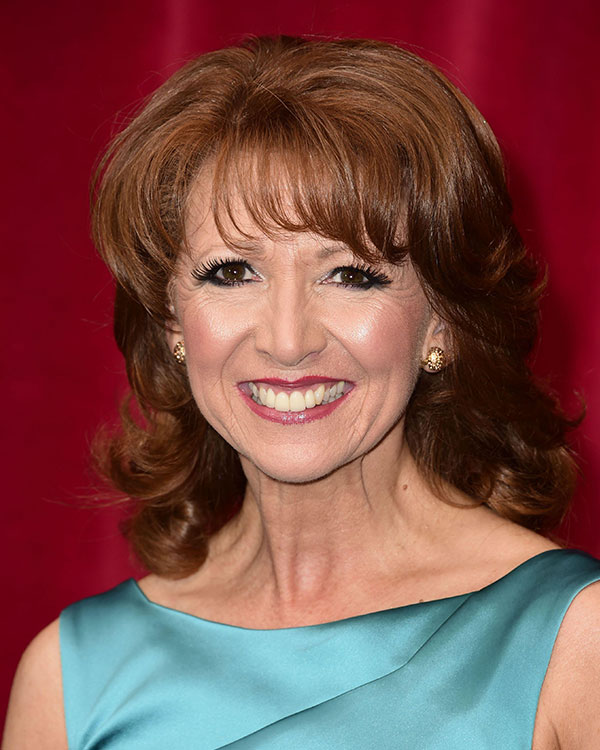
Vous avez l'occasion de travailler avec des personnes qui ont des techniques et des méthodes de travail différentes, ainsi qu'avec des gens du milieu. Non seulement vous apprenez aux côtés de professionnels de l'industrie chaque jour, mais vous avez également un aperçu des projets de la part de quelqu'un qui travaille réellement dans le secteur actuellement.
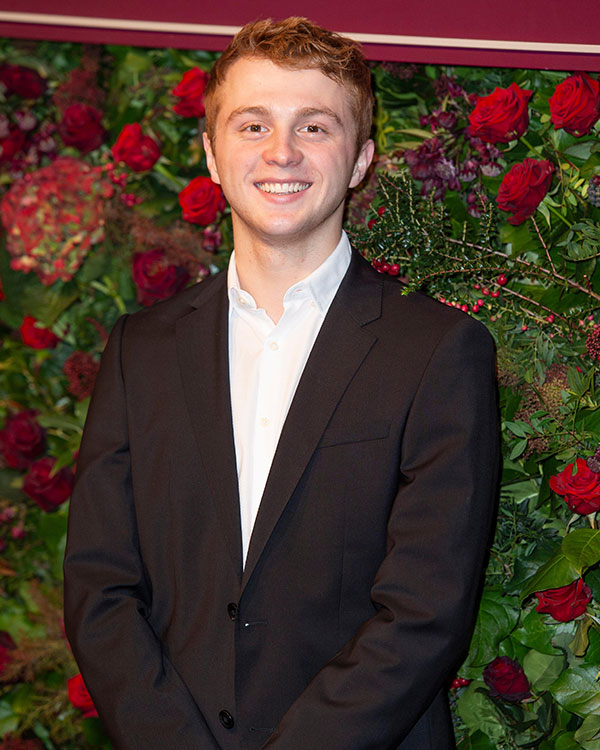
Ma formation à l'Italia Conti m'a véritablement inspiré. Pendant mon séjour, je me suis senti accueilli dans un environnement créatif et bienveillant. Les installations sont formidables, elles nous donnent tout ce dont nous avons besoin pour expérimenter, répéter et nous produire. Avoir accès à d'aussi superbes studios et espaces de spectacle m'a vraiment aidé à me sentir plus préparé et plus confiant dans le développement de ma formation pour devenir un artiste professionnel.


















Merci d'avoir soumis vos coordonnées. Notre équipe vous contactera.